
Table of Contents
ToggleA luxury modern kitchen isn’t just about expensive appliances and trendy finishes, it’s about creating a space that blends high-performance materials, smart design, and real-world functionality. Whether you’re planning a full gut renovation or upgrading key elements, understanding what separates a high-end modern kitchen from a basic remodel will help you invest wisely and avoid costly mistakes. This guide breaks down the materials, layouts, tech integrations, and budget priorities that define today’s most sophisticated kitchens.
Key Takeaways
- Luxury modern kitchen design prioritizes premium materials, clean lines, and seamless technology integration over ornate finishes, creating spaces that perform as well as they look.
- Cabinetry is your largest investment (30–35% of budget), so choose custom or semi-custom plywood construction with soft-close hardware and durable finishes that will outlast budget alternatives.
- Smart layout strategies—including functional islands with 4+ feet of clearance, defined work zones, and hidden storage solutions—matter as much as finishes in determining how well your kitchen functions.
- Engineered quartz countertops and porcelain slabs dominate luxury modern kitchens for their durability, low maintenance, and aesthetic appeal compared to natural stone.
- Layered, dimmable smart lighting systems and seamlessly integrated panel-ready appliances enhance both functionality and visual minimalism without dominating the design.
- Modern luxury kitchens favor warm neutrals, matte finishes, and mixed materials that balance sleek functionality with organic warmth—moving away from stark all-white minimalism toward richer, more textured palettes.
What Defines a Luxury Modern Kitchen?
A luxury modern kitchen distinguishes itself through three core principles: premium materiality, thoughtful spatial design, and seamless integration of technology. Unlike traditional luxury kitchens that lean on ornate cabinetry and decorative moldings, modern luxury prioritizes clean lines, concealed storage, and high-quality surfaces that perform as well as they look.
Material quality sets the tone. Expect engineered stone countertops (quartz or porcelain slabs), custom cabinetry with soft-close hardware, and commercial-grade stainless steel or panel-ready appliances. Cabinets often feature frameless (European-style) construction with full-overlay doors and integrated pulls or push-to-open mechanisms.
Spatial flow matters as much as finishes. Luxury modern kitchens eliminate visual clutter through hidden pantries, appliance garages, and toe-kick drawers. Islands serve multiple functions, prep surface, seating, storage, and are often sized at 4 feet by 8 feet or larger to accommodate both tasks comfortably.
Lighting design goes beyond a single pendant and recessed cans. Expect layered lighting: task lights under uppers, LED strips inside glass-front cabinets, and statement fixtures over the island. Dimmers and smart controls allow you to shift the mood from bright task lighting during meal prep to ambient warmth during dining.
Finally, luxury modern kitchens reflect the broader interior design trends that emphasize minimalism, natural materials, and adaptability without sacrificing warmth or personality.
Essential Elements of High-End Modern Kitchen Design
Premium Materials and Finishes
Material selection in a luxury modern kitchen isn’t about following trends, it’s about durability, maintenance, and how surfaces age over time.
Countertops: Engineered quartz (like Caesarstone or Silestone) dominates for its non-porous surface and consistent veining. Porcelain slabs are gaining ground for their heat resistance and ability to mimic marble or concrete without the upkeep. Natural stone (marble, quartzite) remains popular for islands or statement pieces, but requires sealing and careful maintenance. Expect 3 cm thick slabs as standard.
Cabinetry: Custom or semi-custom cabinetry built with 3/4-inch plywood box construction outlasts particleboard. Finishes range from matte lacquer and stained hardwoods to textured laminates that resist fingerprints. Integrated handles, handleless designs with push-to-open mechanisms, or machined edge pulls keep lines clean.
Backsplashes: Full-height slab backsplashes (floor to ceiling behind the range or sink wall) create dramatic continuity. Alternatives include large-format porcelain tiles (12″ x 24″ or larger), metal panels, or back-painted glass. Grout lines are minimal or eliminated entirely with slab installations.
Flooring: Luxury modern kitchens often use wide-plank engineered hardwood (7″ to 9″ wide), large-format porcelain tile, or polished concrete. Whatever the material, it should be durable enough to handle dropped cookware and easy to clean. Many designers now integrate radiant floor heating for comfort in open-plan layouts.
Smart Technology Integration
High-end kitchens in 2026 don’t just look modern, they operate intelligently. Technology should simplify tasks without adding complexity to the design.
Appliances: Panel-ready refrigerators, dishwashers, and wine coolers blend seamlessly into cabinetry. Induction cooktops offer precise temperature control and are easier to clean than gas. Built-in coffee systems, steam ovens, and warming drawers add convenience for serious home cooks. Look for appliances with Wi-Fi connectivity that allow remote preheat, recipe guidance, or maintenance alerts.
Lighting controls: Smart lighting systems (Lutron, Control4) let homeowners program scenes for cooking, dining, or entertaining. Motion sensors under cabinets activate task lighting automatically. Color-temperature-adjustable LEDs can shift from cool white (4000K) during prep to warm white (2700K) for ambiance.
Faucets and fixtures: Touchless or touch-activated faucets reduce cross-contamination during meal prep. Pot-filler faucets mounted at the range save trips to the sink. Instant hot water dispensers and integrated water filtration systems are increasingly standard.
Ventilation: High-CFM range hoods (600 to 1200 CFM depending on cooktop output) with variable speed controls and automatic sensors keep air quality in check. Many luxury installations use downdraft vents or ceiling-mounted hoods with perimeter suction for quieter, more effective performance.
The current design techniques emphasize tech that works invisibly, enhancing the cooking experience without dominating the visual landscape.
Color Palettes and Aesthetic Trends for 2026
Luxury modern kitchens in 2026 are moving beyond all-white minimalism toward richer, more textured palettes that still maintain a clean aesthetic.
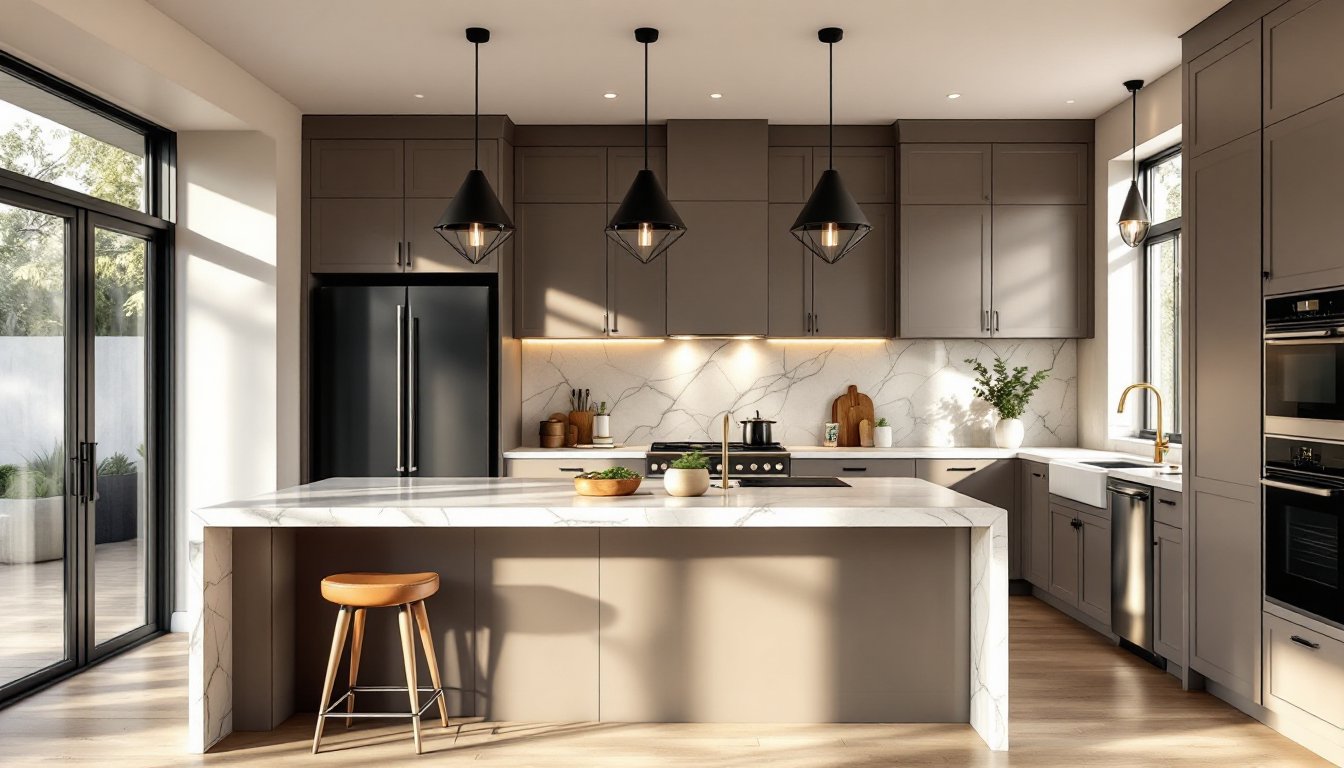
Warm neutrals are overtaking stark whites. Think greige cabinetry, taupe-toned quartz, and natural oak or walnut veneers. These tones add warmth without sacrificing the crisp lines that define modern design. Pairing warm cabinetry with cooler countertops (gray-veined quartz, concrete-look porcelain) creates visual balance.
Bold accent colors appear sparingly but strategically. Deep charcoal, forest green, or navy blue on a feature island or lower cabinets contrasts with lighter upper cabinets or open shelving. Colored glass backsplashes or powder-coated metal range hoods serve as focal points without overwhelming the space.
Two-tone and mixed-material kitchens are standard in high-end projects. A common approach: lighter uppers (or no uppers at all, replaced by open shelving or windows) paired with darker lowers. Mixing wood-grain cabinets with matte lacquer or combining metal accents with natural stone adds depth. According to designers featured in Architectural Digest’s modern kitchen gallery, layering materials creates a lived-in sophistication that pure minimalism can lack.
Matte and textured finishes dominate. Glossy surfaces are being replaced by matte cabinetry, honed or leathered stone counters, and brushed or blackened metal hardware. These finishes hide fingerprints and wear more gracefully over time.
Natural materials bring warmth and texture. Wood ceiling beams, live-edge wood islands, woven pendant lights, and leather bar stools soften the hard surfaces typical in kitchens. The goal is to reflect the broader shift in modern interior styles that balance sleek functionality with organic warmth.
Layout and Space Planning for Maximum Impact
Layout determines how well a luxury kitchen functions, regardless of how much money you spend on finishes. Modern luxury kitchens prioritize workflow, storage density, and visual openness.
The work triangle (sink, stove, refrigerator) still applies, but it’s evolved into work zones: prep, cook, clean, and storage. In larger kitchens, these zones can be separated across an island and perimeter, allowing multiple cooks to work without colliding. Aim for 4 to 9 feet between key appliances, closer feels cramped, farther wastes steps.
Islands are the centerpiece. A functional island needs at least 3 feet of clearance on all working sides (4 feet is better if multiple people use the space). Islands over 4 feet long can accommodate seating with a 12 to 15-inch overhang for knees. Consider split-level islands: one height for prep (36 inches), another for dining or concealing clutter (42 inches).
Storage strategy separates good kitchens from great ones. Luxury modern kitchens use:
• Deep drawers with dividers instead of base cabinets with shelves (easier access, better organization)
• Tall pantry cabinets (84 to 96 inches) with pull-out shelving or swing-out units
• Appliance garages with tambour doors or lift-up panels to hide small appliances
• Toe-kick drawers for flat items like baking sheets or cutting boards
• Corner solutions such as LeMans units or magic corners instead of dead space
Ceiling height and upper cabinetry: In spaces with 9-foot or higher ceilings, take cabinets to the ceiling or leave the top open and use that space for display. 42-inch upper cabinets are standard with 8-foot ceilings: taller spaces allow for stacked cabinets or a combination of closed storage below and open shelving above.
Sightlines and openness: Many luxury modern kitchens eliminate upper cabinets on at least one wall, replacing them with windows, open shelving, or a dramatic backsplash. This keeps the space feeling airy and connected to adjacent living areas. Insights from The Kitchn show that homeowners increasingly value visual lightness as much as storage capacity.
If your kitchen remodel involves moving plumbing, gas lines, or electrical service, expect to pull permits and possibly hire licensed tradespeople. Load-bearing walls require structural engineers and permits, never assume a wall can be removed without evaluation.
Budget Considerations and Investment Priorities
Luxury modern kitchens typically start around $75,000 and can easily exceed $150,000 depending on size, materials, and appliance choices. Regional labor rates and material availability will shift these numbers, but the ratio of spending remains consistent.
Allocate roughly:
• 30–35% to cabinetry (the largest single expense)
• 20–25% to appliances (pro-grade or integrated units)
• 10–15% to countertops and backsplash
• 10–15% to labor (install, plumbing, electrical)
• 5–10% to lighting and hardware
• 5–10% to flooring
• 5–10% contingency for unforeseen issues (old plumbing, structural surprises)
Where to invest for maximum impact:
Cabinetry quality. Custom or semi-custom cabinets with plywood construction, soft-close hardware, and durable finishes will outlast budget boxes. This is not the place to cut corners.
Countertop material. A premium slab (quartz, porcelain, or natural stone) sets the visual tone and takes daily abuse. Laminate won’t hold up in a high-end kitchen.
Professional-grade appliances. A 30 or 36-inch gas or induction range with at least 15,000 BTU burners, a quiet dishwasher (under 45 dBA), and a panel-ready refrigerator are worth the premium if you cook regularly.
Lighting design. Layered, dimmable lighting transforms how the kitchen feels at different times of day. Budget at least $3,000 to $5,000 for fixtures, controls, and installation.
Where you can save without sacrificing quality:
• Use a semi-custom cabinet line instead of fully custom. Many offer excellent quality at 20–30% less.
• Choose quartz over natural marble for counters. It’s lower-maintenance and nearly as elegant.
• Install luxury vinyl plank or large-format porcelain tile instead of hardwood if the kitchen sees heavy traffic or moisture.
• DIY painting, demolition, or simple trim work if you’re comfortable with tools and have time. Leave plumbing, electrical, and cabinet install to pros.
Financing and ROI: A high-end kitchen remodel typically recoups 50–60% of its cost at resale in most markets, according to Remodeling Magazine’s Cost vs. Value report. The return is higher if your home’s overall value supports the investment (don’t drop $120,000 into a $250,000 house). If resale isn’t the goal, focus on what improves daily quality of life.
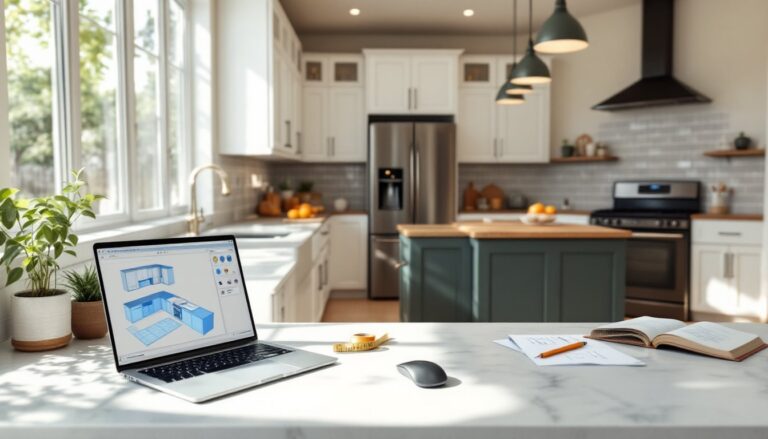
For those exploring emerging approaches, resources like Homedit and the latest design tools can help visualize high-end finishes and layout options before committing to costly decisions.
Luxury modern kitchen design rewards careful planning, quality materials, and a clear understanding of how you actually use the space. Skip the trendy gimmicks, invest in what lasts, and you’ll end up with a kitchen that works beautifully for years.