
Table of Contents
ToggleA minimalist bedroom doesn’t mean cold or empty, it means intentional. Every piece serves a purpose, surfaces stay clear, and the whole space breathes easier. Done right, minimalism creates a bedroom that actually helps you unwind instead of reminding you of weekend chores. This guide walks through the practical decisions, color, furniture, storage, lighting, and texture, that turn a typical bedroom into a streamlined retreat. No lifestyle fluff, just the specific choices that make minimalist design work.
Key Takeaways
- Minimalist bedroom design prioritizes intentionality and function over quantity—every piece should serve a clear purpose or bring genuine joy without sacrificing comfort or personality.
- Invest in quality furniture made from solid wood or welded steel with proper joinery rather than particle board, as durable pieces eliminate the need for frequent replacement and align with core minimalist principles.
- Neutral color palettes featuring warm whites, greige, or muted earth tones create a calm backdrop that reduces visual noise while allowing textures and essential furniture to stand out naturally.
- Smart storage solutions like closet organization, under-bed drawers, and floating shelves keep surfaces clear and visible clutter hidden while maintaining the streamlined aesthetic of minimalist spaces.
- Layer ambient, task, and accent lighting with warm white LED bulbs and dimmer switches to set mood and functionality without adding visual clutter or competing fixtures.
- Introduce texture through natural materials like linen bedding, wool rugs, wood tones, and subtle wall treatments to add warmth and depth while maintaining the calm, uncluttered appeal of minimalist design.
What Makes a Bedroom Truly Minimalist?
Minimalism strips a room down to essentials without sacrificing comfort. It’s about removing distractions, not personality. A minimalist bedroom avoids excess furniture, decorative clutter, and competing visual elements. Everything in the room should have a clear function or bring genuine joy, not just fill a corner.
Three core principles define minimalist bedroom design:
- Simplicity in form: Clean lines, unadorned surfaces, and furniture without ornate details.
- Functional focus: Each item serves a purpose. A nightstand holds a lamp and a book, not a pile of unopened mail.
- Negative space: Empty walls and floors aren’t wasted, they give the eye a place to rest.
Minimalism also means quality construction. A solid platform bed frame made from hardwood or steel beats a particle-board piece with decorative trim. Joinery matters. Dovetail or mortise-and-tenon joints outlast stapled corner brackets and won’t need replacing in five years. This isn’t about aesthetics alone, it’s about investing in pieces that last and skipping the ones that don’t.
Choosing the Right Color Palette for Serenity
Neutral palettes dominate minimalist bedrooms because they reduce visual noise. Whites, grays, beiges, and soft taupes create a cohesive backdrop that lets furniture and textures stand out without competing.
Popular minimalist color schemes include:
- Monochromatic whites: Warm whites (with yellow or cream undertones) feel softer than stark cool whites. Try Benjamin Moore’s Simply White or Sherwin-Williams’ Alabaster for walls that don’t read sterile.
- Greige (gray-beige blends): Balances the coolness of gray with the warmth of beige. Works well in rooms with limited natural light.
- Muted earth tones: Soft terracotta, sage, or clay add warmth without breaking minimalist restraint.
When painting, use flat or matte finishes on walls to minimize light reflection and create a calming, non-glossy surface. Eggshell or satin finishes work better on trim and doors where durability matters. One gallon of quality paint typically covers 350–400 square feet per coat: most bedrooms need two coats.
Accent walls can work in minimalist spaces if kept subtle, think a slightly deeper shade of the base color rather than a bold contrast. Avoid busy patterns or multiple accent colors. If adding color, limit it to one intentional choice, like bedding or a single piece of art, and keep everything else neutral. This approach appears frequently in contemporary interior design trends focused on calm, uncluttered spaces.
Essential Furniture: Quality Over Quantity
Minimalist bedrooms typically include four pieces: a bed, nightstands (or one nightstand), a dresser, and possibly a chair or bench. That’s it. Skip the extra side tables, decorative ladders, or unused accent chairs.
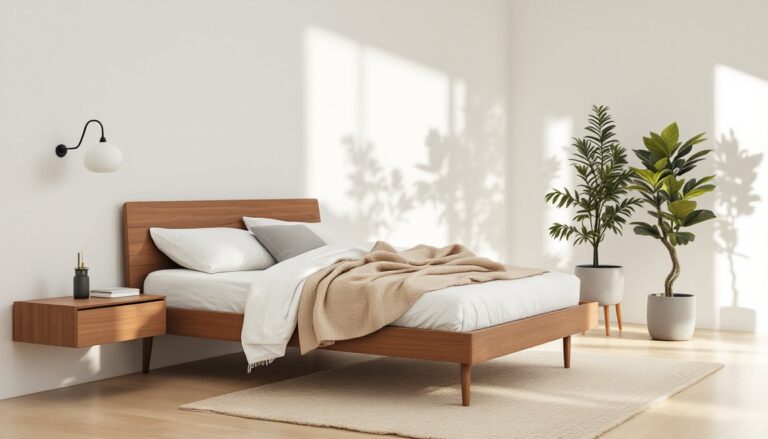
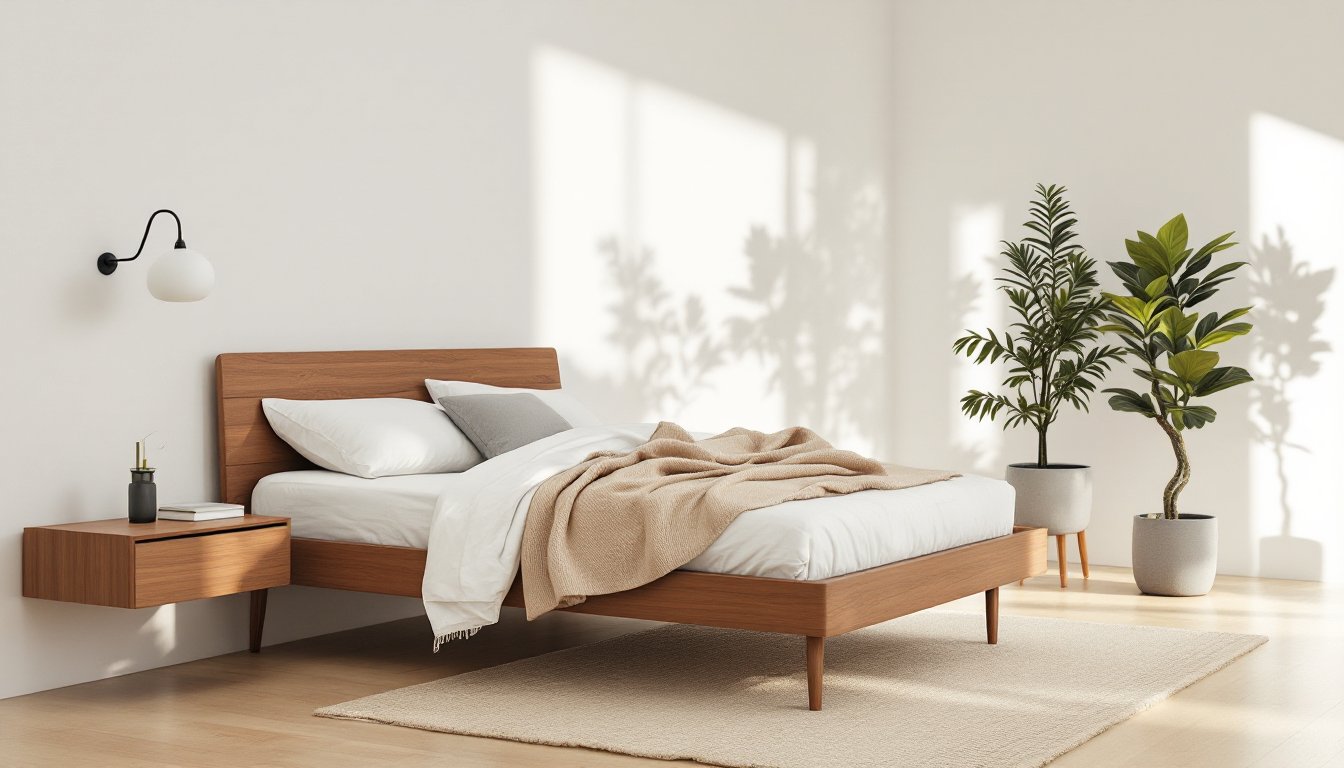
Bed frames should be low-profile. Platform beds with integrated slats eliminate the need for a box spring and keep the visual weight close to the floor. Look for frames made from solid wood (oak, walnut, maple) or welded steel. Avoid upholstered headboards with tufting, they collect dust and add visual complexity.
Nightstands should be simple and proportional. A single drawer or open shelf is enough. Floating nightstands (wall-mounted) work well in tight spaces and emphasize the clean floor line. Many designers implementing minimalist design principles recommend matching nightstand height to mattress height, usually 24–28 inches from the floor for a standard mattress and box spring, or 20–24 inches for a platform bed.
Dressers handle the bulk of clothing storage. A six-drawer dresser in solid wood with smooth-gliding, dovetail-jointed drawers will outlast cheaper alternatives. If space allows, a low, wide dresser (sometimes called a media console) doubles as a TV stand and maintains horizontal lines that feel less imposing.
Seating is optional. A simple upholstered bench at the foot of the bed or a single accent chair in the corner can provide function without crowding. If adding a chair, choose one with a slim frame, think mid-century modern tapered legs, not overstuffed recliners.
Buy the best you can afford. Solid wood costs more upfront but handles decades of use. Particle board and MDF sag, warp, and don’t hold screws after a move or two. For additional context on how simplicity shapes modern room layouts, resources like Dwell showcase real examples of pared-down furniture arrangements.
Decluttering and Storage Solutions That Disappear
Minimalism falls apart without smart storage. Surfaces should stay clear, no piles of books, loose change, or random cords. Everything needs a designated spot, preferably out of sight.
Closet organization is the first line of defense. Use matching hangers (wood or velvet slim-line) to create visual consistency. Install a second hanging rod to double capacity for shirts and pants. Add shelf dividers to keep folded stacks upright. If the closet has depth, pull-out drawers or bins on the floor maximize dead space.
Under-bed storage works if the bed frame allows clearance. Platform beds with built-in drawers (usually 4–6 inches of vertical clearance) are ideal. For beds without storage, low-profile rolling bins or vacuum-sealed bags keep off-season bedding and clothes accessible but hidden. Stick to neutral-colored bins, clear plastic looks cluttered even when organized.
Floating shelves provide open storage without the bulk of bookcases. Limit shelves to one or two, and keep items curated, three to five objects per shelf max. This is where functional items like a small plant, a clock, or a single framed photo live. Real Simple offers useful decluttering strategies that align with minimalist storage goals.
Nightstand discipline is non-negotiable. One lamp, one book, maybe a glass of water. If charging cables are necessary, route them through a small hole drilled in the back of the nightstand or use a cable management box.
Clothing rotation helps maintain order. If a drawer or closet feels tight, remove out-of-season items entirely. Store winter sweaters in a bin during summer, and vice versa. This approach reflects broader design strategies emphasizing function and restraint.
Lighting Design for a Minimalist Bedroom
Lighting sets the mood and functionality of a minimalist bedroom. Layered lighting, ambient, task, and accent, provides flexibility without adding visual clutter.
Ambient lighting comes from ceiling fixtures or recessed cans. A simple flush-mount or semi-flush fixture with a fabric drum shade diffuses light evenly. Skip chandeliers with crystals or ornate metalwork. If installing recessed lighting, space 4-inch or 6-inch cans about 4–6 feet apart for even coverage. Use warm white LED bulbs (2700K–3000K) to avoid harsh, clinical brightness.
Task lighting focuses on reading or dressing areas. Adjustable swing-arm sconces mounted on the wall next to the bed eliminate the need for table lamps and free up nightstand space. Position the sconce so the bulb sits 18–24 inches above the mattress for comfortable reading. Alternatively, a single minimalist table lamp with a simple linen or metal shade works if wall-mounting isn’t an option.
Accent lighting is subtle in minimalist spaces. A single LED strip under a floating nightstand or behind a headboard adds a soft glow without visible fixtures. Dimmer switches are essential, they let you adjust brightness for morning routines versus evening wind-down.
Natural light should be maximized but controlled. Simple roller shades, linen curtains, or cellular shades in neutral tones filter light without heavy drapes. If privacy allows, leave windows undressed entirely during the day. Blackout liners can be added to existing shades without changing the exterior look.
Avoid multiple lamps, string lights, or decorative fixtures that compete for attention. One or two well-placed light sources handle the job. Publications like Design Milk often feature case studies of streamlined lighting solutions in contemporary interiors.
Adding Texture and Warmth Without the Clutter
A minimalist bedroom can feel cold if every surface is smooth and hard. Texture adds warmth and depth without introducing visual clutter. The key is layering materials, not objects.
Bedding is the easiest place to introduce texture. Linen sheets, a waffle-weave blanket, and a chunky knit throw create tactile variety while staying neutral. Stick to two or three coordinating tones, all whites, or white with gray and beige. Avoid busy patterns or excessive decorative pillows. Two sleeping pillows and one or two accent pillows (in solid colors or subtle textures) are enough.
Rugs ground the space and soften hard flooring. A natural fiber rug, jute, sisal, or wool, in a neutral tone adds warmth underfoot without competing visually. Size matters: for a queen bed, use a rug at least 8×10 feet so it extends 18–24 inches beyond the sides and foot of the bed. Smaller rugs look disconnected.
Wood tones introduce organic warmth. If the bed frame and nightstands are wood, let the grain show. Avoid matchy-matchy sets: mixing walnut and oak adds interest without clashing. Incorporating natural materials reflects ideas commonly explored in modern interior design techniques.
Wall treatments can add subtle texture. Shiplap, board-and-batten, or a single accent wall in textured plaster or limewash creates dimension without pattern. These treatments work best in muted tones that blend with the rest of the palette.
Plants are the exception to the “no clutter” rule. One or two simple potted plants, a snake plant, a fiddle-leaf fig, or a small succulent, bring life and soften hard edges. Use plain ceramic or concrete pots, not decorative or patterned planters.
Avoid decorative trays, candle clusters, or grouped photo frames. If displaying art, choose one large piece or a simple gallery wall with matching frames. The principle remains: every element should feel intentional, and examples of this approach appear consistently in curated design ideas.
Conclusion
Minimalist bedroom design doesn’t happen by accident. It requires deliberate choices about color, furniture, storage, lighting, and texture. The goal isn’t to strip a room down to nothing, it’s to keep only what serves a purpose or brings calm. Start with the essentials, invest in quality pieces, and maintain discipline with storage and surfaces. The result is a bedroom that feels open, restful, and truly yours, without the visual noise.